Anis Bhatti: The Responsibility of Being Powerful
Nov 08, 2026On spiritual sovereignty, the humanity behind extraordinary leadership, and the courage to become someone who can hold the life they were born to create.
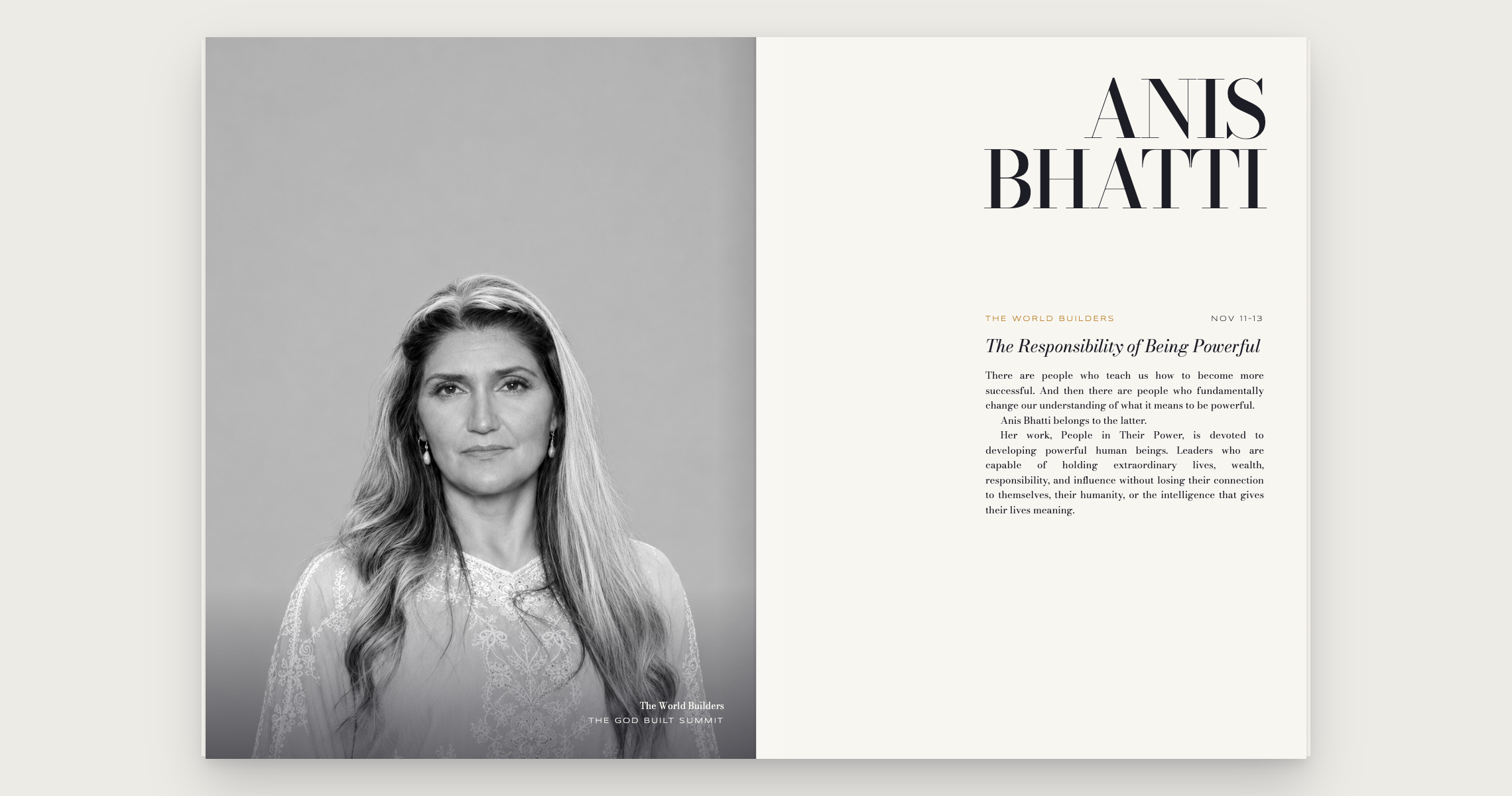
There are people who teach us how to become more successful. And then there are people who fundamentally change our understanding of what it means to be powerful.
Anis Bhatti belongs to the latter.
For as long as I have been building businesses online, Anis has been a mentor, a friend, an inspiration, and an anchor in my life. I have known her through years of profound personal transformation, and I have experienced firsthand the extraordinary depth of her ability to see beyond who someone has learned to be and into the person they are capable of becoming.
There is something quite remarkable about being in the presence of someone who can recognize your greatness without participating in the patterns that prevent you from expressing it.
Anis has that capacity.
Her work, People in Their Power, is devoted to developing powerful human beings. Leaders who are capable of holding extraordinary lives, wealth, responsibility, and influence without losing their connection to themselves, their humanity, or the intelligence that gives their lives meaning.
And what makes her approach particularly fascinating is that she is not especially interested in the conventional measurements of greatness.
She is interested in the person beneath them.
What is the value of an extraordinary life if you cannot fully inhabit it?
There is a particular experience that can emerge after someone has achieved the things they once believed would make them happy.
The business is successful. The money is there. The opportunities have arrived. From the outside, the life they have created appears extraordinary.
And yet something remains unanswered.
It may appear as boredom, restlessness, an absence of fulfillment, or a longing for greater intimacy, meaning, or connection. Sometimes it is difficult to articulate because nothing is obviously wrong. The person has learned how to achieve, but achievement itself no longer satisfies what is stirring within them.
This is territory Anis understands deeply.
Her work with leaders and high-performing individuals explores the relationship between external accomplishment and internal freedom. She is interested in what happens when someone who has mastered the art of producing results begins asking an entirely different set of questions.
Who am I when I am no longer performing?
What do I actually want?
What does it mean to feel fully alive within the life I have created?
These are not necessarily questions that can be answered through another strategy, another achievement, or another level of recognition. They require a different quality of attention, one that is willing to examine the identity, conditioning, and patterns that have shaped a person's relationship with themselves and the world.
For Anis, the work is not about diminishing ambition or suggesting that worldly success is somehow incompatible with spiritual depth. It is about expanding a person's capacity to experience the life they have created, rather than remaining trapped in the pursuit of whatever comes next.
Power without sovereignty is another form of captivity.
Anis's work is rooted in spiritual sovereignty: the freedom to know oneself, exercise discernment, make conscious choices, and live from an authentic connection with the source of life.
It is a particularly interesting philosophy to bring into the world of leadership, where power is so often associated with authority over other people, financial resources, professional status, or the ability to influence outcomes.
A person can possess all of those things and still feel profoundly powerless within themselves.
They may be governed by fear, approval, old patterns of survival, the need to prove their worth, or an identity they have spent years protecting. They may have developed extraordinary abilities in the external world while remaining unable to make choices that honor what they know to be true.
Anis approaches power from a different direction.
Her work brings together spiritual inquiry, alchemy, energetic practices, intuition, and psychological and therapeutic understanding. Rather than focusing exclusively on changing circumstances, she works with the internal structures through which a person experiences those circumstances.
What makes Anis's approach particularly remarkable is the precision with which she recognizes the moments when someone unconsciously surrenders their own authority. The work doesn't always happen through extraordinary revelations or dramatic experiences. Sometimes it begins with something as ordinary as a sentence spoken in passing. Someone says, "I have to," and Anis hears the possibility of a choice they haven't yet recognized. A familiar phrase becomes an opening into the beliefs, obligations, and patterns that have quietly been making decisions on their behalf.
There is extraordinary intelligence in knowing where to look and what to question. Anis has developed the ability to recognize the precise moment an old pattern begins to take authority over a person's choices, and to bring enough awareness to that moment that something different becomes possible. What appears to be a small shift in language or perception can create a profound energetic change. The person is no longer simply reacting from a familiar identity. They can see the choice in front of them and begin exercising their own authority.
The intention is not to create dependence on a teacher or mentor. It is to deepen a person's relationship with their own intelligence, their own authority, and their capacity to choose.
Through her spiritual lens, this involves reconnecting with God as the source of life, love, and meaning. Yet she does not require the people she mentors to share her spiritual beliefs. The work makes room for different understandings of that connection while remaining deeply concerned with the human experience of freedom.
There is a distinction between being powerful because of what you control and being powerful because you are no longer controlled by the things that once governed you.
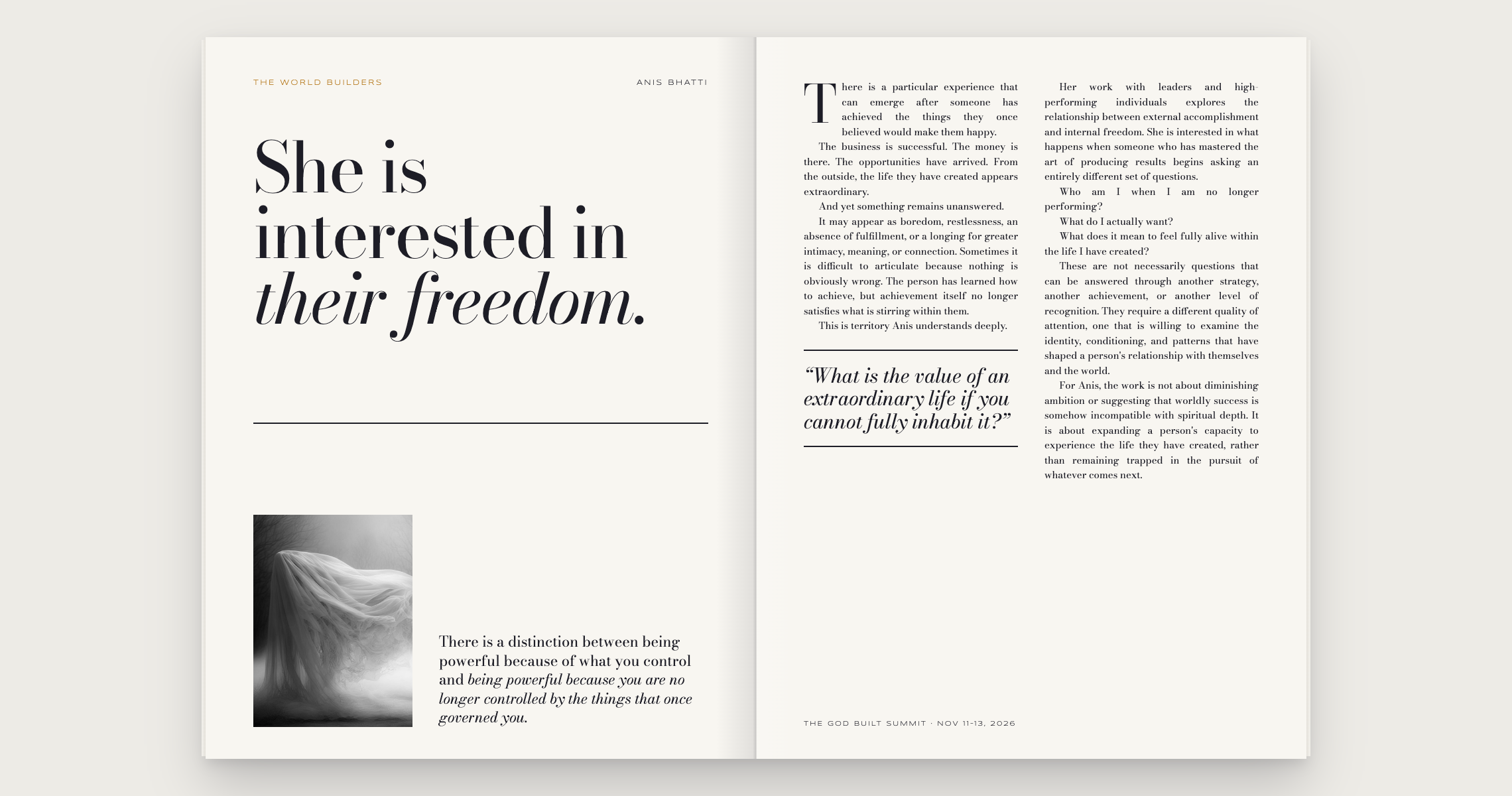
Anis is interested in the latter.
The highest standard of yourself is rarely the most comfortable one.
I know something about this dimension of Anis's work because I have lived it.
There was a time when I could recognize the magnitude of what I wanted to create but could not consistently meet that vision from the person I had learned to be. Fear, limitation, familiar patterns, and a relationship with life shaped by victimhood were influencing what I believed was available to me.
Working with Anis over the years changed that relationship.
Not because she made the process easier, or because she offered me a more appealing explanation for why things were difficult.
Quite the opposite.
There is nothing particularly comfortable about being mentored by someone who can see your capacity so clearly that she refuses to reinforce the identity keeping you from it.
Anis has an extraordinary ability to meet a person at what I can only describe as a soul level, while simultaneously asking them to take responsibility for the choices, behaviors, and patterns shaping their lives.
She can recognize the magic in someone without romanticizing the work required to express it.
And that is a rare combination.
Over time, her mentorship supported me in becoming someone capable of holding dreams I had once experienced as impossibly large. Not simply imagining a different life, but developing the internal authority and responsibility required to participate in creating it.
This is what I find so compelling about her understanding of power.
It is not the ability to get everything you want without confronting yourself.
It is the willingness to become someone who can meet the life you say you desire.
What if greatness is measured by what our power makes possible for others?
There is another dimension of Anis's philosophy that feels especially important in the current conversation about wealth, leadership, and personal success.
She believes that however much someone has achieved, their greatness is ultimately revealed through their humanity.
How they treat people. How they carry responsibility. How they exercise influence. What they choose to contribute to the lives and world around them.
This is a fundamentally different measure of leadership from the one we have become accustomed to celebrating.
We live in a culture that readily confuses visibility with significance, financial accumulation with wisdom, and influence with authority. The ability to command attention or generate extraordinary wealth can become evidence of greatness without much examination of the person exercising that power.
Anis asks us to look more closely.
What happens to our humanity as our influence expands? Do we become more capable of love, discernment, generosity, and responsibility? Does our success create greater freedom for ourselves while also allowing us to contribute something meaningful to others?
Or do we simply become more accomplished versions of the people we were before?
Her work suggests that the development of a powerful leader cannot be separated from the development of a deeply conscious human being.
That wealth and influence amplify what is already present, making the quality of a person's inner life increasingly consequential as their external power grows.
And that the responsibility of leadership extends beyond what we are capable of creating for ourselves.
It includes what becomes possible for other people because of who we have chosen to become.
The world does not need more powerful people who are disconnected from their humanity.
It needs people who understand the responsibility of power.
People capable of recognizing their own intelligence without needing to diminish someone else's. People who can hold wealth without making wealth the measure of their worth. People who can lead without abandoning their humanity, and who can pursue extraordinary ambitions without losing their connection to the lives unfolding around them.
This is the world Anis Bhatti is devoted to creating.
Her work challenges the assumption that the highest expression of human potential is simply the accumulation of more: more money, more influence, more recognition, more achievement.
Perhaps the more meaningful measure is the quality of the person who holds those things.
Their capacity for love. Their freedom to choose. Their willingness to tell themselves the truth. Their relationship with God, with life, and with the people whose lives they touch.
For me, Anis represents something I believe is increasingly rare in the world of personal development and business mentorship: someone whose commitment to your greatness is inseparable from her commitment to your humanity.
She is not interested in helping people perform a more impressive version of themselves.
She is interested in helping them become free.
And when a person begins to live from that freedom, the possibilities for what they can create, contribute, and experience become profoundly different.
Because power, in its most meaningful expression, is not simply the capacity to change your circumstances.
It is the capacity to choose who you will be within them, and what you will make possible for the world because you were here.
THE ESSENTIAL QUESTION
How do we hold power?
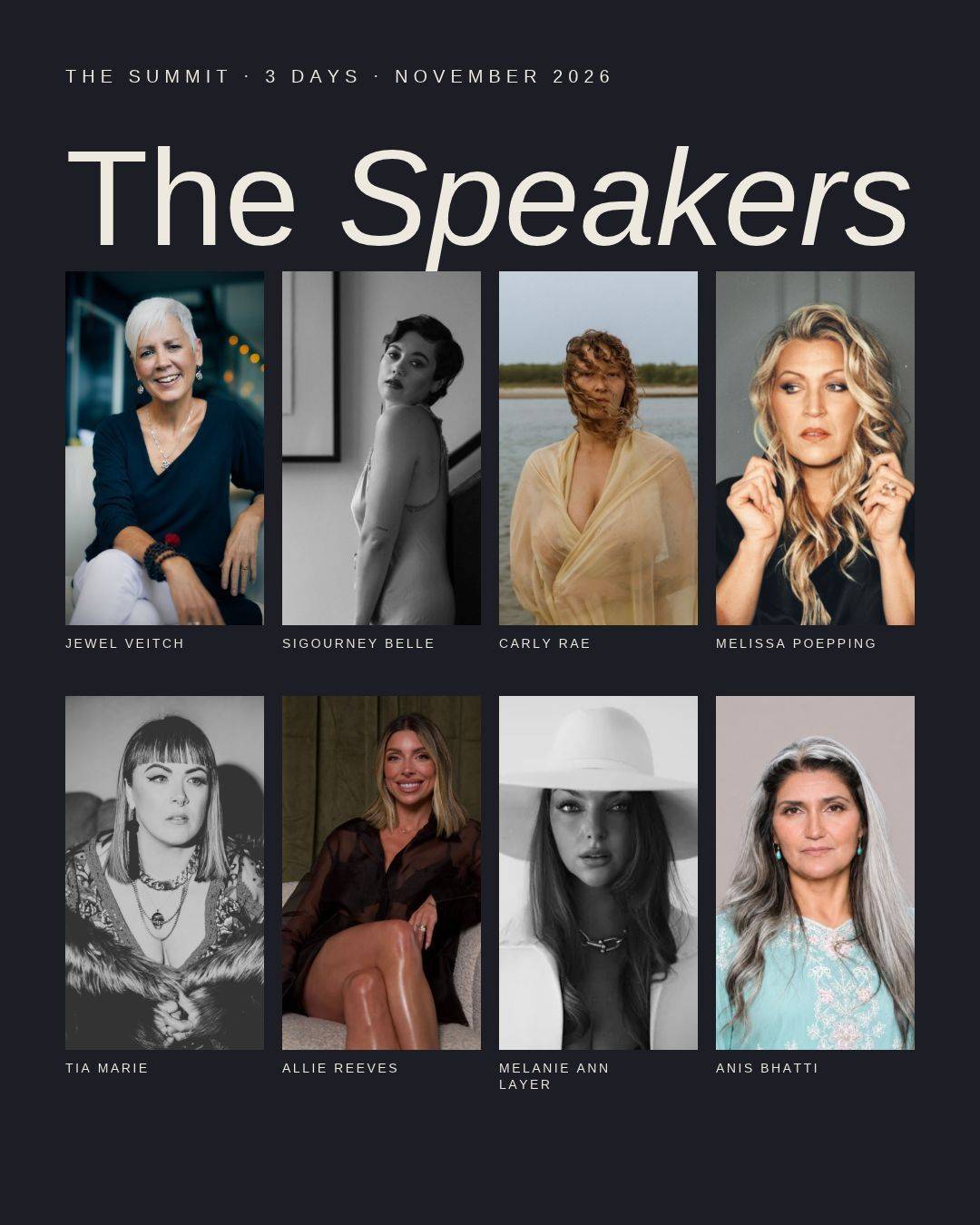
At the God Built Summit, Anis Bhatti joins Tia Marie for a conversation about spiritual sovereignty, the development of powerful leaders, and the responsibility that accompanies extraordinary wealth, influence, and human potential.
Together, we'll explore what it means to move beyond the need to perform, reconnect with our own authority, and develop the capacity to hold the lives we are here to create without losing our humanity along the way.
THE GOD BUILT SUMMIT
Genius. Magic. Business.
November 11–13, 2026
An extraordinary gathering of world builders exploring the intelligence, decisions, and bodies of work behind businesses built from original design.
Register free: https://www.sinatia.com/god-built-summit