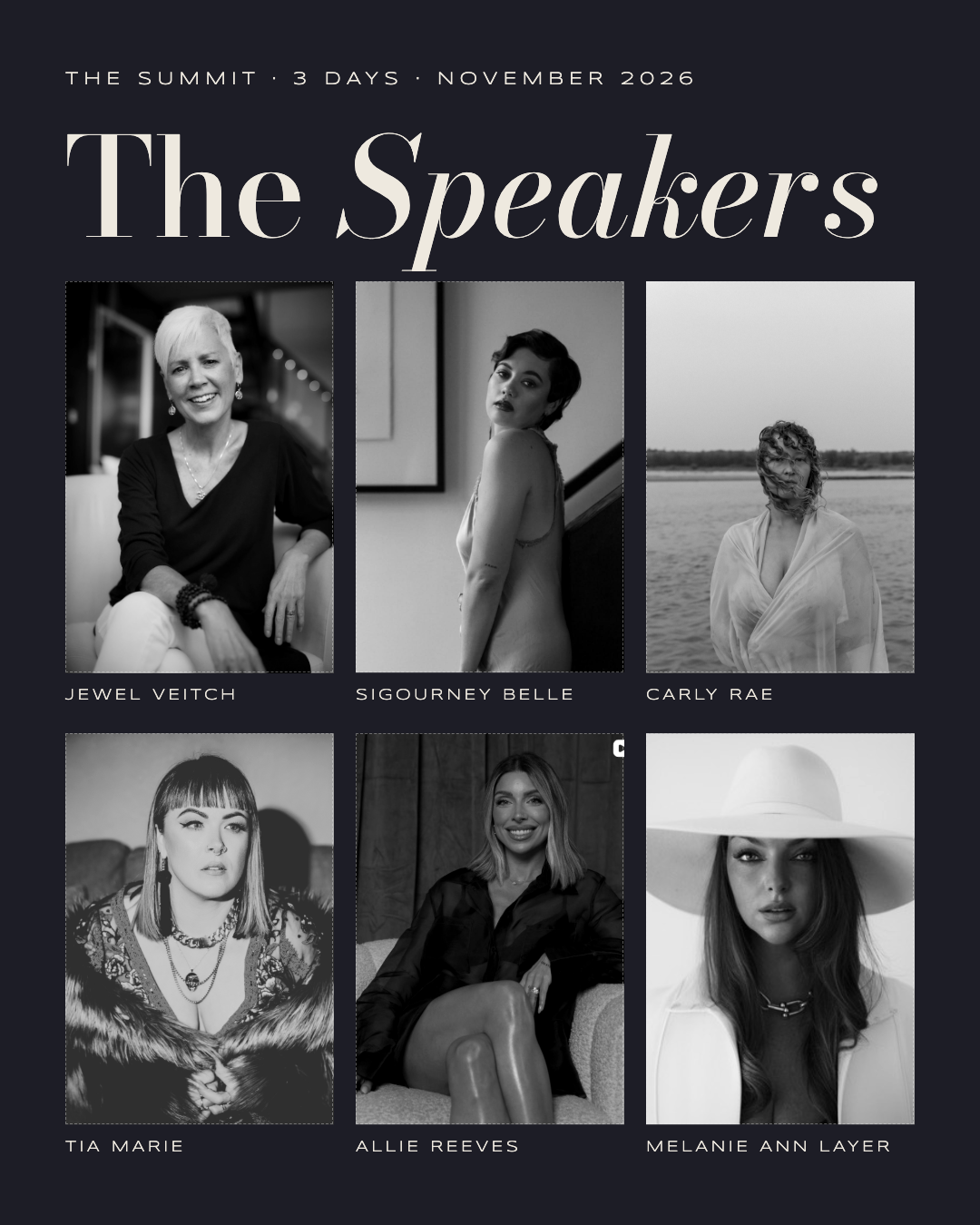
Melissa Poepping: The Intelligence Behind the Ingredients
Nov 03, 2026On beauty, self-leadership, and what happens when a founder's philosophy becomes the standard behind everything she creates.
Every product tells a story about the decisions made before it ever reaches someone's hands. The ingredients selected. The standards upheld. The compromises accepted or refused. The assumptions about what a customer wants, needs, or deserves.
In the beauty industry, much of that decision-making remains invisible. The finished product is what we see. The intelligence behind it is another story.
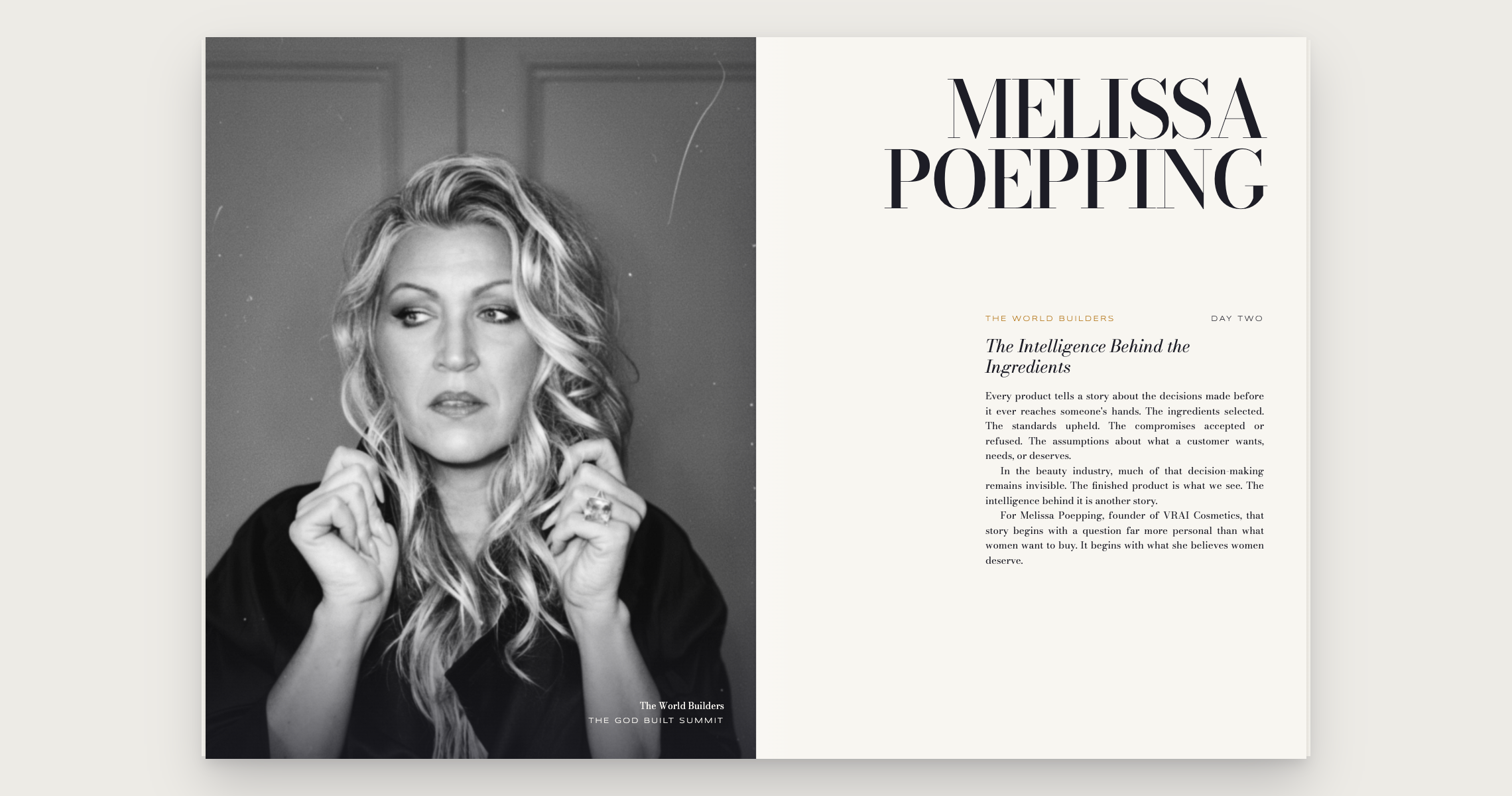
For Melissa Poepping, founder of VRAI Cosmetics, that story begins with a question far more personal than what women want to buy. It begins with what she believes women deserve.
From her family's rural farming property in Minnesota, Melissa has created a luxury beauty company built around ingredient intelligence, intentional formulation, and an uncompromising relationship with quality. There is something fascinating about the contrast: an elegant, highly considered beauty brand operating from a rural landscape, led by a founder whose work moves between personal mastery and the practical realities of physical commerce.
VRAI is the visible expression of a philosophy Melissa has been developing for more than a decade. A philosophy concerned with the standards we accept, the choices we make, and what becomes possible when we begin questioning the systems we've been taught to trust.
What happens when you begin questioning the standards you've been taught to accept?
Melissa's entrepreneurial journey began long before VRAI. Her early exploration of the ingredients found in household and personal-care products eventually led to The Chemical Free Home, a publishing venture that brought her research and practical solutions into homes across the country. What began as a personal investigation developed into a body of work centered on helping people make more informed decisions about the products they use.
Her work eventually expanded into cosmetics, including her involvement in the development of Savvy Minerals for Young Living. Through that experience, Melissa gained firsthand exposure to the complexities of bringing beauty products into the marketplace, while also discovering that the conversations women wanted to have extended far beyond makeup.
Questions about beauty often became questions about identity. About confidence, self-perception, personal standards, and the relationship a woman has with herself. That intersection between the external and internal experience of beauty became an important dimension of Melissa's work, eventually finding expression through One Iconic Life and her exploration of personal mastery.
What makes this progression interesting is that Melissa didn't abandon one discipline to pursue another. Her work continued to expand into different forms, each revealing another dimension of the same underlying inquiry: what does it mean to live according to your own standards?
With VRAI, that question became a physical business.
A founder's philosophy is only as powerful as the decisions she's willing to make because of it.
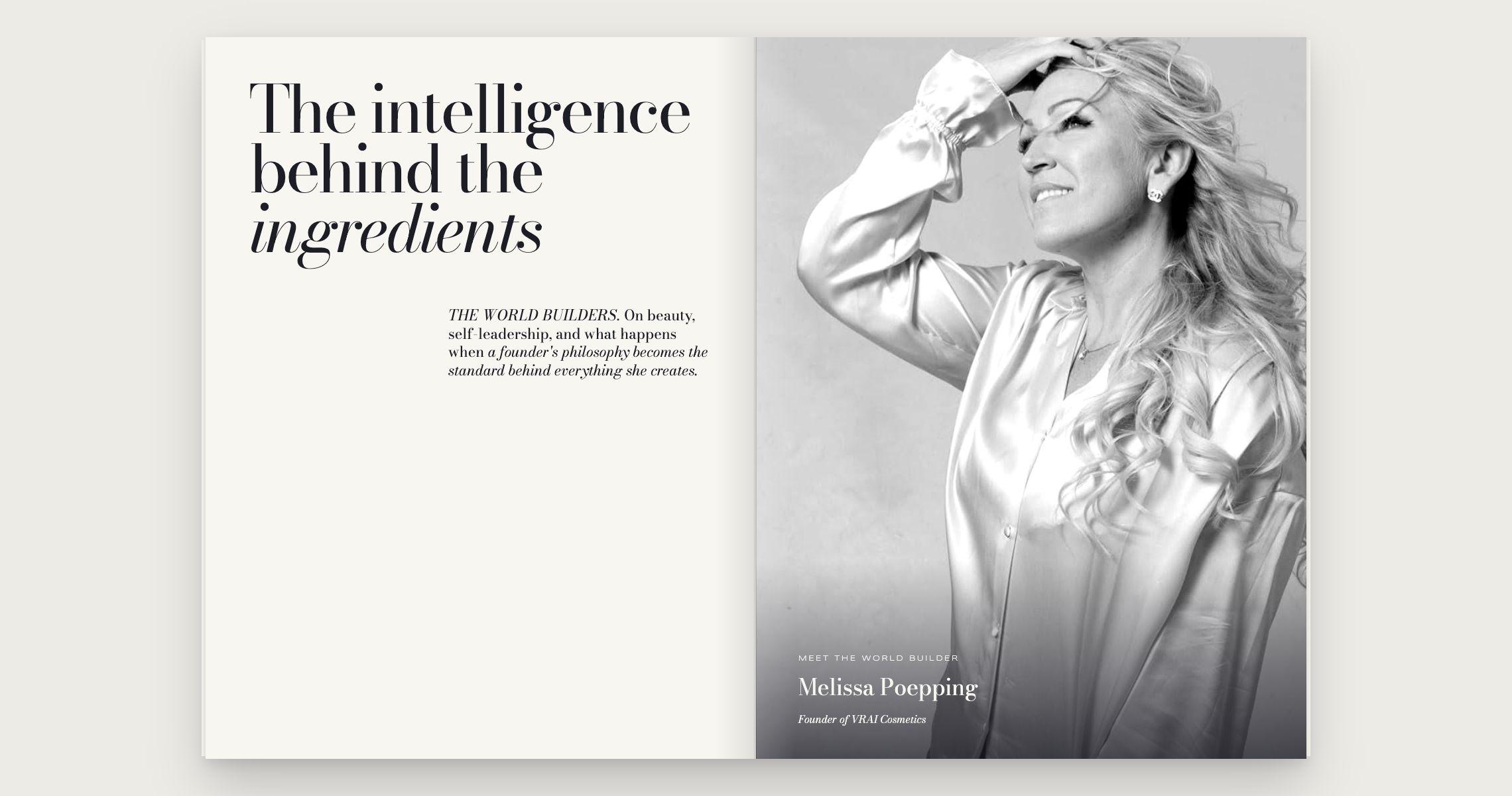
The beauty industry is built around desire. Trends move quickly, products are constantly reinvented, and consumers are presented with an endless vocabulary of promises, innovations, and ideals. Within that environment, creating another cosmetics company is relatively straightforward as a concept. Creating one that reflects a distinctly different philosophy requires something more demanding.
At VRAI, Melissa directs the ingredient selection, formulation purpose, and standards behind the products developed for the brand. The company's approach brings together luxury cosmetics and skincare considerations, emphasizing the relationship between performance, formulation, and the long-term experience of the woman using the product.
Her philosophy is not simply a story written around a finished collection. It informs the decisions required to create the collection in the first place.
Which ingredients belong in a formula? What makes a product worthy of inclusion? What compromises are acceptable, and which ones undermine the reason the business exists? How does a brand maintain its standards while navigating the commercial realities of manufacturing, distribution, and growth?
These are the decisions that transform a founder's point of view into something tangible. A philosophy is relatively easy to articulate when it remains an idea. It becomes considerably more consequential when it has to determine what gets made, what gets rejected, and what ultimately reaches a customer's hands.
There is an important distinction between creating a product to participate in an existing market and creating a product because you believe something different deserves to exist within that market. One begins with an opportunity. The other begins with a conviction. And while both require commercial intelligence, the second asks the founder to become responsible for maintaining the integrity of an idea through every stage of its development.
What if your genius was never meant to become another coaching program?
Much of the contemporary conversation about entrepreneurship has become synonymous with the digital economy. Founders are encouraged to identify their expertise, package their knowledge, develop an offer, build an audience, and create a business around what they can teach.
For many people, this model has created extraordinary opportunities. But it is only one expression of entrepreneurship, and it doesn't necessarily accommodate every kind of vision.
Some ideas require physical materials, specialized manufacturing, packaging, inventory, fulfillment, retail relationships, and an entirely different understanding of operations. Some require substantial investment long before a finished product can be placed in a customer's hands. Others demand the ability to navigate an industry whose established systems were not designed around the founder's particular standards.
VRAI operates within this physical reality. Beyond its carefully curated online presence, the business includes a Minnesota fulfillment operation, product development, customer delivery, and opportunities for retail partnerships. It is a company whose promises must be fulfilled through actual objects, physical processes, and repeatable systems.
The distinction matters because the beauty of a vision does not eliminate the responsibilities of bringing it into the world. If anything, the more particular the vision, the more precise the execution must become.
A product has to do what it promises. It has to arrive intact. It has to justify its price. It has to create an experience that can be repeated without the founder personally overseeing every interaction.
This is where creative vision meets the disciplines of business architecture, and where a founder's relationship with her work becomes something more than inspiration. It becomes stewardship.
You don't have to live inside an industry's expectations to build something extraordinary within it.
There is another aspect of Melissa's business that makes her an interesting world builder: the environment from which she has chosen to create it.
Luxury beauty is commonly associated with fashion capitals, metropolitan sophistication, and highly curated urban lifestyles. Melissa's life and business are rooted in rural Minnesota, where the physical landscape surrounding her is far removed from the conventional imagery of the cosmetics industry.
Yet the world she has created through VRAI is refined, intentional, and unmistakably elegant.
The contrast challenges an assumption that often goes unquestioned in entrepreneurship: that to build a certain kind of business, a founder must also adopt the lifestyle, geography, and identity traditionally associated with that industry.
Melissa's work suggests another possibility. A founder can understand the expectations of a market without allowing those expectations to dictate the conditions of her own life. She can create something sophisticated without relocating herself into the conventional image of sophistication.
There is freedom in that distinction, but there is also responsibility. Building on your own terms requires the willingness to develop the infrastructure, relationships, and operational capacity necessary to support those terms.
The world you create does not have to resemble the world you inherited. But it does have to work.
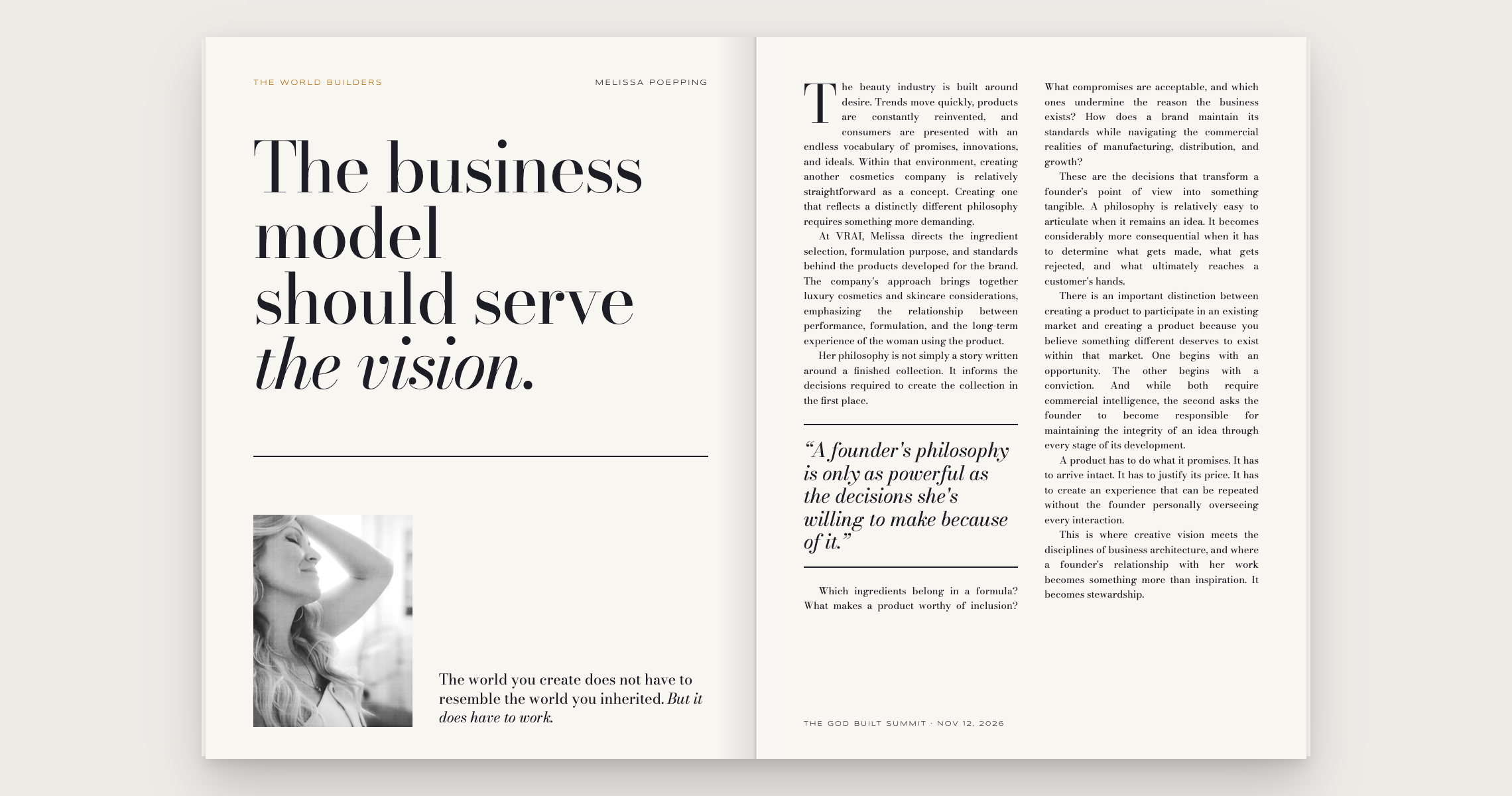
The business model should serve the vision. Not the other way around.
Perhaps the most valuable perspective Melissa brings to the God Built Summit is the permission to think beyond the business models that dominate the online entrepreneurial conversation.
Not every founder is here to build a coaching practice. Not every body of knowledge is meant to become a course, a membership, or a digital methodology. Some founders are meant to develop physical products, create spaces, establish new standards within existing industries, or build entire ecosystems where education, commerce, and experience intersect.
And sometimes the work refuses to fit neatly into a single category.
Melissa's journey spans publishing, education, personal mastery, cosmetics, and physical retail. Rather than treating these as unrelated pursuits, her work reveals how a founder's underlying philosophy can find expression through multiple forms.
The question becomes less about identifying the business model that is currently working for everyone else and more about understanding what your particular vision requires.
For the founder who has been carrying an idea for a product line, a physical brand, or something she cannot quite fit into the familiar language of online entrepreneurship, that distinction may change everything.
Because there is a point at which studying an idea is no longer the same as building it. A point at which personal development must become decision-making, conviction must become standards, and imagination must become something that can exist independently of the person who first envisioned it.
Melissa Poepping has spent years working at that intersection.
Her work is a reminder that the intelligence behind a business does not always need to be explained to be experienced. Sometimes it can be formulated, packaged, shipped, displayed, purchased, and used. Sometimes a founder's philosophy becomes most visible through the physical things she chooses to bring into the world.
And perhaps the question isn't simply what do you know, or even what are you here to teach.
Perhaps it is what could exist because you were willing to make it.
THE ESSENTIAL QUESTION
How do we bring a vision into physical form without compromising what made it worth creating?
At the God Built Summit, Melissa Poepping joins Tia Marie for a conversation about product creation, personal mastery, the realities of building a physical business, and the relationship between a founder's standards and the world she creates.
THE GOD BUILT SUMMIT
Genius. Magic. Business.
November 11–13, 2026
An extraordinary gathering of world builders exploring what it means to build a business from original design.
Register free: https://www.sinatia.com/god-built-summit
Discover VRAI Cosmetics: https://www.vraicosmetics.com/